

As a supplier of PVD Stainless Steel Sheet, I often encounter inquiries regarding the adhesion strength of PVD coatings on stainless steel sheets. This property is crucial as it directly impacts the performance, durability, and aesthetic appeal of the final product. In this blog, I'll delve into the concept of adhesion strength, factors influencing it, testing methods, and its significance in the context of our PVD Stainless Steel Sheets.
Understanding Adhesion Strength
Adhesion strength refers to the force required to separate a coating from its substrate. In the case of PVD (Physical Vapor Deposition) coatings on stainless steel sheets, it measures how well the thin film adheres to the surface of the steel. A strong adhesion is essential because it ensures that the coating remains intact under various environmental conditions, mechanical stresses, and chemical exposures.
When a PVD coating adheres well to the stainless steel substrate, it provides several benefits. Firstly, it enhances the corrosion resistance of the steel. The coating acts as a barrier, preventing moisture, oxygen, and other corrosive agents from reaching the surface of the metal. Secondly, it improves the wear resistance, protecting the steel from scratches, abrasions, and other forms of mechanical damage. Additionally, a well - adhered PVD coating can enhance the aesthetic appearance of the stainless steel sheet, providing a uniform, high - quality finish.
Factors Influencing Adhesion Strength
Several factors can influence the adhesion strength of PVD coatings on stainless steel sheets.
Surface Preparation
The surface condition of the stainless steel sheet before coating is one of the most critical factors. A clean, smooth, and defect - free surface is essential for good adhesion. Any contaminants such as oil, grease, dirt, or oxide layers can act as a barrier between the coating and the substrate, reducing the adhesion strength. Therefore, thorough cleaning and surface treatment processes are necessary. This may include degreasing, pickling, and polishing to remove impurities and create a suitable surface for coating deposition.
Coating Material and Composition
The choice of coating material and its composition also play a significant role. Different PVD coating materials have different chemical and physical properties, which can affect their adhesion to stainless steel. For example, some coatings may have a better chemical affinity with the steel surface, resulting in stronger adhesion. The composition of the coating, including the presence of alloying elements or additives, can also influence its adhesion characteristics.
Deposition Process Parameters
The PVD deposition process parameters, such as temperature, pressure, gas flow rate, and deposition rate, can significantly affect the adhesion strength. Optimal process conditions need to be carefully selected to ensure proper coating formation and good adhesion. For instance, if the deposition temperature is too high, it may cause thermal stress in the coating - substrate system, leading to delamination. On the other hand, if the deposition rate is too fast, the coating may have a porous structure, reducing its adhesion.
Substrate Material and Properties
The type and properties of the stainless steel substrate, such as its composition, hardness, and microstructure, can influence the adhesion of the PVD coating. Different grades of stainless steel have different surface energies and chemical reactivities, which can affect the interaction between the coating and the substrate. For example, a stainless steel with a higher carbon content may have different adhesion characteristics compared to a low - carbon grade.
Testing Adhesion Strength
To ensure the quality and performance of PVD - coated stainless steel sheets, various testing methods are available to measure the adhesion strength.
Scratch Test
The scratch test is a commonly used method. In this test, a stylus with a defined tip geometry is drawn across the coated surface under a gradually increasing load until the coating starts to delaminate. The critical load at which delamination occurs is used as an indicator of the adhesion strength. This test provides a quantitative measure of the coating's resistance to scratching and can help evaluate its adhesion under mechanical stress.
Tape Test
The tape test is a simple and quick qualitative method. A piece of adhesive tape is applied firmly to the coated surface and then peeled off at a specific angle and speed. The amount of coating that adheres to the tape is examined. If little or no coating is removed, it indicates good adhesion. However, this test is relatively subjective and may not provide a precise measurement of the adhesion strength.
Pull - off Test
The pull - off test involves attaching a dolly to the coated surface using an adhesive. A pulling force is then applied perpendicular to the surface until the coating detaches from the substrate. The force required to pull off the coating is measured, and this value represents the adhesion strength. This test provides a direct measurement of the normal adhesion force between the coating and the substrate.
Significance in Our PVD Stainless Steel Sheets
As a supplier of PVD Stainless Steel Sheets, understanding and controlling the adhesion strength is of utmost importance. Our customers rely on us to provide high - quality products that meet their specific requirements. A strong adhesion of the PVD coating ensures that our stainless steel sheets have excellent corrosion and wear resistance, which is crucial for applications in various industries such as architecture, automotive, and consumer goods.
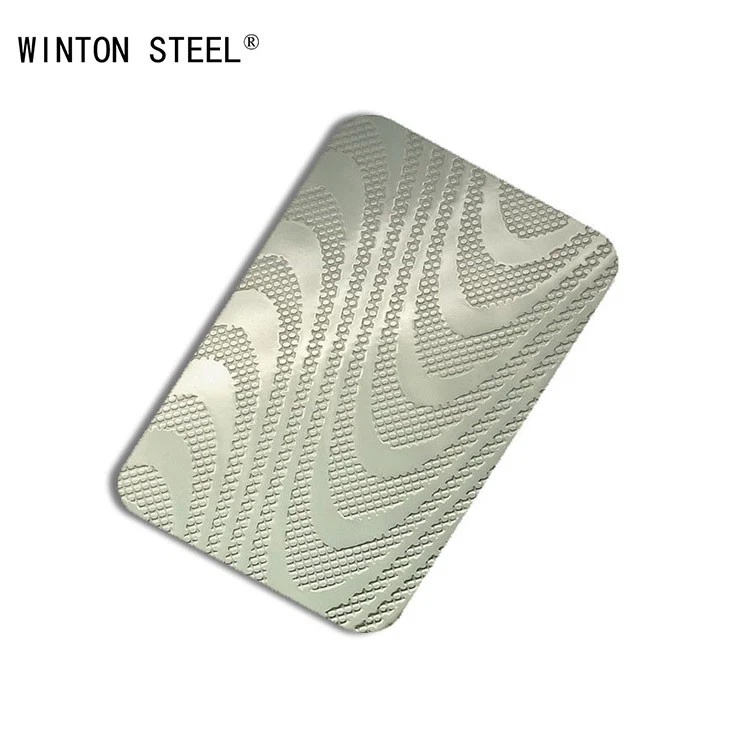
For architectural applications, Embossing Stainless Steel Sheet with a well - adhered PVD coating can maintain its appearance and performance over a long period, even when exposed to harsh environmental conditions. Similarly, Etching Stainless Steel Sheet used in interior decoration needs to have good adhesion to prevent the coating from peeling or flaking, ensuring a long - lasting and attractive finish. In the automotive industry, Water Ripple Stainless Steel Sheet with a strong PVD coating can withstand the vibrations, abrasions, and chemical exposures encountered during vehicle operation.
Ensuring High Adhesion Strength in Our Products
At our company, we take several measures to ensure high adhesion strength in our PVD Stainless Steel Sheets.
Rigorous Surface Preparation
We have a well - established surface preparation process that includes multiple cleaning and treatment steps. Our state - of - the - art cleaning equipment can effectively remove contaminants from the stainless steel surface, ensuring a clean and smooth substrate for coating.
Advanced Coating Technology
We use advanced PVD coating equipment and technology to precisely control the deposition process parameters. Our R & D team continuously optimizes the coating process to ensure the best possible adhesion between the coating and the substrate.
Quality Control
We have a comprehensive quality control system in place. Every batch of PVD - coated stainless steel sheets undergoes strict adhesion testing using multiple methods. Only products that meet our high - quality standards are released to the market.

Conclusion
The adhesion strength of PVD coatings on stainless steel sheets is a critical property that affects the performance, durability, and aesthetic appeal of the final product. By understanding the factors influencing adhesion strength, using appropriate testing methods, and implementing strict quality control measures, we can ensure that our PVD Stainless Steel Sheets offer excellent adhesion and meet the diverse needs of our customers.
If you are interested in our PVD Stainless Steel Sheets or have any questions regarding adhesion strength or other product - related issues, please feel free to contact us for further discussion and potential procurement. We are committed to providing you with the highest - quality products and the best service.
References
- "Physical Vapor Deposition (PVD) Processing" by John A. Thornton.
- "Surface Engineering for Corrosion and Wear Resistance" edited by R. Arunachalam and S. K. Seshadri.
- "Adhesion Science and Engineering: Surfaces, Chemistry and Applications" edited by K. L. Mittal.


