

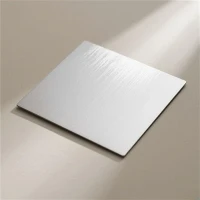

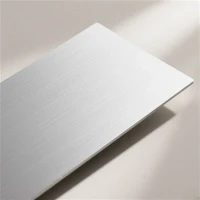
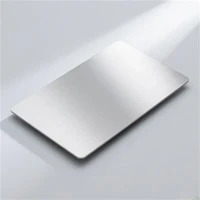
Stainless Steel Sheet
Your Professional Stainless Steel Sheet Supplier
FOSHAN WINTON STAINLESS CO., LTD. has accumulated over 20 years of expertise in decorative and processed stainless steel materials, evolving into a large-scale enterprise with a workforce of more than 1,000 employees. Leveraging advanced technologies and extensive industry experience, the company has established an integrated ecosystem encompassing stainless steel industrial services, precision processing, intelligent warehousing, efficient logistics, and global trade.
☆Comprehensive One-Stop Stainless Steel Solutions
We integrate end-to-end processes—including industrial services, precision processing tailored to customer specifications, intelligent warehousing, and efficient logistics—ensuring seamless coordination and significant time savings for clients.
☆Flexible and Scalable Order Management
As an enterprise with over 1,000 employees, we are fully equipped to handle orders of all scales—from small-batch customizations to large-volume production—while consistently maintaining high product quality.
☆Sector-Specific Technical Support
Serving diverse industries such as construction, furniture, and automotive manufacturing, we provide innovative, high-performance stainless steel solutions specifically designed to meet the unique requirements of each sector.
☆Extensive Global Market Coverage
With a presence across China and in more than 50 international markets, we ensure reliable and timely delivery worldwide. Customized shipping and supply plans are available to align with specific volume or project timeline needs.


Parameter
|
Alloy Composition |
11.5-13.5% Cr, ≤0.15% C, ≤1.0% Mn |
|
Tensile Strength (Annealed) |
≥485 MPa |
|
Tensile Strength (Heat-Treated) |
≤860 MPa |
|
Elongation |
≥20% (Annealed) |
|
Hardness (Annealed) |
≤200 HB |
|
Max Service Temperature |
600°C |
|
Thickness Range |
0.1-3.0mm (±0.02mm tolerance) |
Types of Stainless Steel Sheet
The stainless steel sheet produced by our company mainly include the following types:
321 Stainless Steel Sheet
321 stainless steel sheet, a titanium-stabilized austenitic variant, excels in high-temperature scenarios where resistance to sensitization is non-negotiable.
410 Stainless Steel Sheet
410 stainless steel sheet is a martensitic alloy sheet celebrated for its high strength, excellent hardenability, and cost-effectiveness-distinguishing itself from austenitic grades like 316L.
420 Stainless Steel Sheet
420 stainless steel sheet is a robust choice for applications demanding high hardness and wear resistance. Its martensitic structure, combined with a balanced chromium content, makes it suitable for components where strength and durability in moderately corrosive environments are essential.
430 Stainless Steel Sheet
430 stainless steel sheet is a practical ferritic stainless steel choice, offering a balance of corrosion resistance and affordability. Its chromium-rich composition makes it suitable for a range of indoor and mild outdoor applications where cost-effectiveness and everyday durability are key.
Advantages of Stainless Steel Sheet
Corrosion Resistance
In environments where moisture and frequent cleaning are the norm, such as hospitals, commercial kitchens, and pharmaceutical labs, materials that rust or degrade can become breeding grounds for bacteria.
Non-Porous & Easy to Clean
Unlike other materials that can absorb moisture and harbor bacteria, stainless steel has a non-porous, ultra-smooth surface. This prevents dirt, grime, and pathogens from settling in, which makes cleaning as simple as a quick wipe with disinfectants.
Chemical & Heat Resistance
From industrial-strength disinfectants to high-temperature sterilization, stainless steel sheets stand up to the toughest cleaning methods without warping, degrading, or absorbing chemicals.
Durability & Longevity
Stainless steel isn’t just hygienic—it’s built to last. Its impact-resistant nature means it can withstand daily wear and tear from heavy equipment, spills, and constant use. Unlike other materials that may chip, crack, or degrade, stainless steel sheets retain its integrity, reducing long-term costs.
Applications of Stainless Steel Sheet


Medical
Stainless steel sheets are essential in medical environments due to their sterility, corrosion resistance, and ease of cleaning. They are used to create surgical instruments, hospital furniture, and medical implants.
Automotive
The automotive industry relies on stainless steel sheets for their strength, resistance to high temperatures, and lightweight properties. Typical uses include exhaust systems, trims, and structural components.
Construction
Stainless steel sheets are used for cladding, roofing, and structural supports. Their resistance to environmental conditions ensures longevity and aesthetic appeal.
Foodservice
Stainless steel sheets ensure hygiene and ease of cleaning on everything from kitchen counters to food processing equipment, making them ideal for maintaining food safety standards.
Aerospace
Stainless steel sheets are employed in aerospace for their excellent strength-to-weight ratio, resistance to extreme temperatures, and durability.
Surface Treatment of Stainless Steel Sheets
#3 Brushed Finish
Achieved by rough grinding, this finish generally results in a coarse, low- to non-reflective surface. This finish typically has a roughness average (RA) range of 25-40, which may vary slightly from mill to mill.
#4 Brushed Finish
This finish provides a satin-like, unidirectional texture created through grinding or polishing. With a standard range of 6-25 RA, it offers a muted aesthetic, making it ideal for appliances, architectural elements, and automotive interiors.
#8 Mirror Finish
Known for its highly reflective, mirror-like surface, this finish involves extensive polishing to remove imperfections and produce an almost flawless appearance.
2B Mill Finish
The 2B finish is a smooth, matte surface achieved through cold rolling, annealing, and pickling, followed by passing through bright rolls.
2D Mill Finish
Similar to 2B, the 2D finish is cold rolled and annealed but retains a duller, matte surface.
Stainless Steel Sheet Manufacturing Process
Melting
Raw materials melted together
01
Raw materials melted together
decarburization removes excess carbon
02
Tuning
To achieve the exact composition, the molten metal is sampled and tweaked with the addition of appropriate alloying elements
03
Forming
The molten steel is cast into a long billet and then rolled into flat sheets
04
Rolling
Final product thickness is achieved using a series of rolling processes
05
Packaging and Shipping
|
Packaging |
Standard export seaworthy packing, such as: bare packing, bundle packing, wooden carton packing or as every customer's requirement. |
|
Shipping |
Shipping by sea, by air, by express are acceptable. According to your requirements. |
Our Factory
To meet diverse demands from global construction, furniture and kitchen & bathroom equipment industries, a 67,000-square-meter modern production base was built in Zhaoqing. Equipped with 39 intelligent production lines covering the entire stainless steel processing chain, it boasts an annual capacity of 300,000 tons.

