

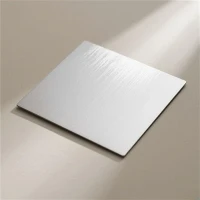

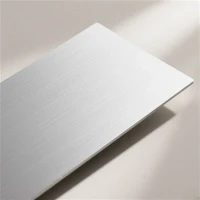


Precision Slit 316 Stainless Steel Strip
Is an austenitic chromium-nickel-molybdenum alloy engineered for critical environments involving severe chemical corrosion, chloride pitting, and elevated temperatures. The addition of 2.0% to 3.0% molybdenum significantly enhances localized corrosion resistance compared to standard 304 grades, particularly in marine atmospheres, acidic chemical processing, and chloride-rich aqueous media.
Supplied in cold-rolled and hot-rolled conditions, these sheets are processed to tight thickness and dimensional tolerances to support direct laser cutting, CNC stamping, deep drawing, and automated welding fabrication. Each production lot is traceable to primary melting mills and delivered with verified mill test reports.
Key Features
Enhanced Pitting Resistance: PREN (Pitting Resistance Equivalent Number) typically >= 23, derived from optimized chromium, molybdenum, and nitrogen contents.
Tight Dimensional Control: Cold-rolled variants maintain strict thickness and width tolerances, minimizing post-processing machining waste.
Fabrication Adaptability: Excellent cold-formability and deep-draw characteristics; low carbon (316L variant available) minimizes carbide precipitation during fusion welding.
High Temperature Stability: Retains mechanical strength and creep resistance up to 870 deg C in intermittent service and 925 deg C in continuous service.
Certified Traceability: Full material identification stamped or inkjet-marked per sheet, backed by EN 10204 3.1 certification.
Technical Specifications
|
Parameter |
Specification |
|
Product Name |
Precision Slit 316 Stainless Steel Strip |
|
Material Grade |
AISI 316 / EN 1.4401 |
|
UNS |
S31600 |
|
Standard |
ASTM A666 / EN 10088-2 |
|
Thickness |
0.1–3.0 mm, subject to availability |
|
Slit Width |
Customized to requirements |
|
Width Tolerance |
According to order requirements |
|
Surface Finish |
2B, BA, No. 4, customized |
|
Edge Condition |
Slit Edge / Deburred Edge |
|
Temper |
Annealed or work-hardened, as available |
|
Coil ID |
Customized |
|
Coil OD |
Customized |
|
Processing |
Precision Slitting |
|
Applications |
Chemical Equipment, Industrial Components, Corrosion-Resistant Parts |
Available Grades and Material Options
To match specific structural and environmental requirements, the following variations are stocked and processed:
Grade 316 (UNS S31600): Standard carbon variant offering higher elevated-temperature tensile and creep strength.
Grade 316L (UNS S31603 / EN 1.4404): Extra-low carbon variant (<= 0.03%), engineered specifically to prevent intergranular corrosion caused by carbide precipitation during heavy-section welding.
Grade 316Ti (UNS S31635 / EN 1.4571): Titanium-stabilized grade providing enhanced resistance to sensitization at temperatures between 425 deg C and 815 deg C.
Applications
Marine & Offshore Engineering: Shipboard fittings, propeller shafts, desalination plant pressure vessels, and seawater piping systems.
Chemical & Petrochemical Processing: Reaction vessels, heat exchangers, distillation columns, piping manifolds, and flue gas desulfurization (FGD) systems.
Pharmaceutical & Biotechnology: Cleanroom sterile panels, WFI (Water for Injection) storage tanks, piping systems, and bioreactor components.
Food & Beverage Processing: Brewery tanks, dairy processing equipment, conveyor belts, and automated washing systems exposed to organic acids and sanitizing chlorides.
Semiconductor Manufacturing: Ultra-clean gas distribution components and acid etching bath linings.
Custom Thickness and Dimensions
In addition to standard coil and sheet dimensions, precision processing services are available to meet exact manufacturing tolerances:
Precision Slitting
Width tolerances down to +/- 0.1 mm via multi-blade rotary slitting lines.
Cut-to-Length (CTL)
Flat sheets sheared to customer-specified lengths with squareness tolerance within +/- 0.5 mm.
Special Thickness Gauges
Intermediate non-standard gauges cold-rolled to strict customer specification.
Edge Conditioning
Deburred, rounded, or mill edges available to prevent handling injuries and streamline automated assembly.
Quality Control and Surface Inspection
Every production batch undergoes strict quality verification protocols prior to warehouse release:
Surface Finishes Available:
2B: Cold-rolled, annealed, pickled, and skin-passed for smooth, reflective utility finish.
BA (Bright Annealed): Controlled atmosphere annealing yielding a highly reflective, mirror-like finish.
No. 4 / Hairline (HL): Mechanically polished with specific grit abrasives (150# - 320#) for architectural and hygienic applications.
Inspection & Testing Protocols:
Positive Material Identification (PMI): Via X-ray fluorescence (XRF) spectrometry.
Dimensional Verification: Using digital micrometer arrays and laser flatness gauges.
Surface Defect Inspection: Checking for laminations, slivers, pinholes, and roller marks.
Mill Test Reports (MTR): Provided in accordance with EN 10204 3.1, detailing exact heat analysis and mechanical test results.
Packaging and Shipping
To prevent transit corrosion, edge deformation, and surface scratching, export-grade packaging is applied as standard:
Interleaving: PVC protective film (laser-cut grade or standard peelable film) applied to top/both sides; interleaved paper or plastic film between sheets.
Palletization: Secured on fumigated solid wood pallets or reinforced steel pallets, strapped with high-tensile steel bands.
Edge Protection: Corner angle protectors installed to prevent handling impacts during loading/unloading.
Weatherproofing: Wrapped in moisture-barrier VCI (Volatile Corrosion Inhibitor) film and heavy-duty waterproof kraft paper, containerized for sea or air freight.
FAQ
Request a Quote
To receive a formal quotation, please provide the following technical parameters to our engineering sales team:
Grade: 316 / 316L / 316Ti
Dimensions: Thickness x Width x Length (or Coil ID/OD)
Quantity: Total weight (Metric Tons/Kg) or number of sheets
Surface Finish: 2B / BA / No.4 / HL (Specify if PVC protection is required)
Destination Port / Delivery Terms: Incoterms (FOB, CIF, DDP) and destination zip code
Hot Tags: precision slit 316 stainless steel strip, China precision slit 316 stainless steel strip manufacturers, suppliers, factory, 201 2ba Stainless Steel Sheet, 201 Stainless Steel Plate, 304 2ba Stainless Steel Stee, 304 Stainless Steel Plate, 309s Stainless Steel Sheet, 321 Stainless Steel Plate
You Might Also Like


Send Inquiry